Build, Buy, or Borrow: How Smart Founders Choose the Right Path to Their First Product
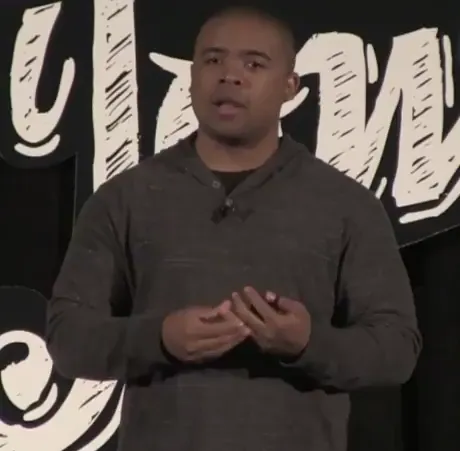
Photo: Big Omaha, CC BY 3.0, via Wikimedia Commons
Every startup begins with a hypothesis. You believe a problem exists, you believe you have a solution, and you need a product to test whether the market agrees. What separates founders who validate their ideas quickly from those who exhaust their runway before a single customer pays is rarely brilliance — it is the strategic clarity with which they approach that first critical question: How should I actually build this thing?
The conversation around minimum viable products has matured considerably over the past decade. No longer is the default answer simply "hire a developer." Today's founders navigate a landscape populated by sophisticated no-code platforms, specialized development agencies, offshore engineering teams, and the ever-present option of building an in-house technical team from the ground up. Each path carries genuine merit — and genuine risk.
Understanding What You Are Actually Trying to Prove
Before evaluating any development strategy, founders must achieve clarity on one fundamental question: what does your MVP need to demonstrate? This distinction matters enormously. A product designed to attract seed funding must showcase vision and polish. A product designed to acquire your first ten paying customers must demonstrate utility and reliability. A product designed purely to test a behavioral assumption may need nothing more than a functional prototype.
Confusing these objectives is one of the most expensive mistakes an early-stage company can make. Founders who build for investors when they should be building for users routinely over-engineer their initial products, burning months and capital on features that will never survive first contact with the market.
Once you have defined your validation goal with precision, the right development approach becomes considerably easier to identify.
The Case for Custom In-House Development
Building a technical team internally offers unmatched control over product direction, iteration speed, and institutional knowledge. When your core value proposition is deeply technical — think proprietary algorithms, complex data pipelines, or defensible intellectual property — custom development is often not a luxury but a necessity.
Consider the trajectory of companies like Stripe or Plaid, both of which were built on the premise that their technical architecture was the product. No off-the-shelf solution or agency engagement could have produced what those teams created, because the competitive moat lived inside the code itself.
However, the hidden costs of in-house development are significant and frequently underestimated. A mid-level full-stack developer in a major US market commands between $120,000 and $160,000 annually in base salary alone, before benefits, equity, and management overhead. Recruiting timelines stretch from three to six months at minimum. And the organizational complexity of managing even a small engineering team demands founder bandwidth that could otherwise be directed toward sales, product discovery, or fundraising.
In-house development makes strategic sense when your product requires proprietary technology, when you have already secured sufficient funding to sustain an engineering team through the validation phase, and when technical talent is genuinely central to your competitive positioning.
When Agency Partnerships Accelerate the Journey
For founders who possess domain expertise but lack a technical co-founder, partnering with a software development agency represents a pragmatic middle path. A well-chosen agency brings established workflows, cross-functional expertise, and the ability to begin building immediately — without the six-month recruiting cycle.
The US market offers a wide spectrum of agency options, from boutique firms specializing in startup MVPs to larger consultancies with dedicated product strategy practices. Engagements typically range from $30,000 to $150,000 for a production-ready MVP, depending on complexity and scope.
The critical variable in any agency relationship is alignment. Founders who treat an agency purely as a vendor — handing over a specification document and waiting for delivery — consistently report disappointing outcomes. Those who engage agencies as collaborative partners, involving them in product thinking and user research, tend to receive products that are both technically sound and commercially viable.
It is also worth noting that a strong agency engagement can serve as a talent pipeline. Many founders who initially build with an agency subsequently hire one or two engineers from that team once the product has achieved initial traction and the business case for in-house development has been validated.
The No-Code Revolution and Its Legitimate Place in the Stack
Perhaps no development in the past five years has done more to democratize entrepreneurship than the maturation of no-code and low-code platforms. Tools such as Bubble, Webflow, Glide, and Airtable have enabled non-technical founders to bring sophisticated products to market in weeks rather than months, at a fraction of traditional development costs.
The results have been genuinely impressive. Startups like Comet (a freelance marketplace for tech talent) and Dividend Finance both relied on no-code infrastructure to validate core product assumptions before investing in custom development. Their experiences demonstrate that for many business models — particularly marketplaces, SaaS tools, and internal workflow applications — no-code platforms are not a compromise but a competitive advantage during the validation stage.
The limitations are real but often overstated. No-code platforms introduce constraints around customization, performance at scale, and certain categories of technical complexity. They also create vendor dependency that must be managed thoughtfully as the business grows. However, for founders whose primary goal is market validation rather than technical defensibility, these trade-offs are frequently worth accepting.
A Framework for Making the Decision
Rather than prescribing a single correct answer, the following framework offers a structured approach to evaluating your specific situation.
Assess your technical differentiation. If your product's value is inseparable from proprietary technology, prioritize in-house development or a deeply collaborative agency relationship. If your value lies in your market insight, brand, or operational execution, no-code solutions may serve you well through the validation phase.
Map your runway against your timeline. A founder with $500,000 in pre-seed funding and a twelve-month runway faces a fundamentally different calculus than one bootstrapping with $50,000 in personal savings. Be honest about how much time your approach will consume before you generate meaningful revenue or learning.
Evaluate your team's existing capabilities. The presence of a strong technical co-founder changes the equation entirely. So does a founding team with no prior experience managing software development projects.
Define your minimum success criteria. What must your MVP accomplish for you to consider the investment worthwhile? A clear answer to this question prevents scope creep and keeps your development effort focused on validation rather than perfection.
The Budding Solutions Perspective
At Budding Solutions, we work regularly with founders navigating precisely this decision. Our experience consistently reinforces one central truth: the best MVP development strategy is the one that generates real market learning the fastest, within the constraints of your specific resources and competitive context.
The path from idea to scalable business is rarely linear, and the technology decisions made in the earliest stages have a way of compounding — for better or worse — as the company grows. Investing the time to make this choice deliberately, rather than defaulting to the most familiar option, is one of the highest-return activities available to an early-stage founder.
Your product is the seed of everything that follows. Plant it thoughtfully.