The Traction Trap: 5 Operational Errors That Stall Companies Before They Ever Reach Scale

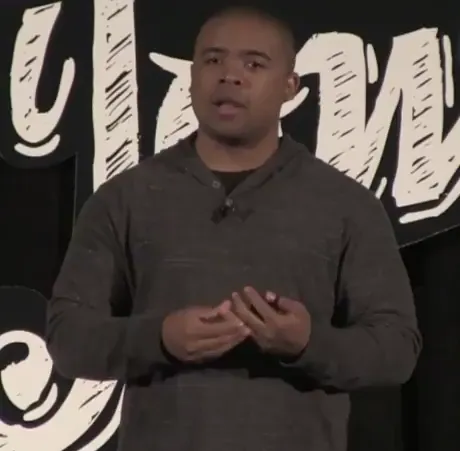
Photo: Dialh, CC BY 4.0, via Wikimedia Commons
There is a particular kind of business failure that receives far less attention than the dramatic zero-to-one collapse of an early-stage startup. It happens quietly, often over the course of twelve to eighteen months, and it strikes companies that have already proven their concept, built a customer base, and generated real revenue. These are companies in the $500,000 to $5 million range — businesses that have earned the right to grow — and yet something goes wrong.
The culprit is rarely the market. It is rarely the product. More often than not, it is the organization itself.
This phase of business development — sometimes called the "messy middle" — is where operational debt, leadership blind spots, and premature scaling decisions converge to create a ceiling that feels inexplicable from the outside. The following five patterns represent the most common ways that growing US companies self-sabotage precisely when momentum is within reach.
1. Hiring for Today's Headcount Instead of Tomorrow's Complexity
The Warning Sign: Your team has grown from five to fifteen people, but communication has become slower, not faster. Decisions that once took an afternoon now require multiple meetings across multiple weeks.
The instinct to hire aggressively when revenue is climbing is understandable. Demand is real, capacity is strained, and the solution appears obvious: add people. What founders frequently underestimate, however, is that each new hire does not simply add capacity — it adds relational complexity, coordination overhead, and cultural dilution if the hiring process is not deliberate.
Companies in this revenue band often hire operators when they need leaders, and generalists when they need specialists. A customer success manager hired to handle fifty accounts will struggle when that number reaches two hundred, not because of personal inadequacy, but because the role itself has transformed into something entirely different.
The Consequence: Organizations built this way develop structural fragility. When a key individual departs — and at this stage, they often do — the institutional knowledge and informal processes they carried leave with them.
The Solution: Before posting a role, define not only what the position requires today but what it will demand in eighteen months. Hire slightly ahead of your complexity curve rather than reactively filling gaps. Establish onboarding processes and documentation practices that capture institutional knowledge systematically, reducing dependency on any single individual.
2. Allowing Technology Infrastructure to Lag Revenue Growth
The Warning Sign: Your team has developed an elaborate system of spreadsheets, manual workarounds, and disconnected software tools to manage operations that have outgrown the systems designed to support them.
This pattern is extraordinarily common among bootstrapped and lightly funded companies in the $500,000 to $2 million range. The original tools — perhaps a basic CRM, a shared Google Drive, and a project management platform — were adequate at the company's founding. As revenue and headcount grow, these systems are patched rather than replaced, accumulating technical and operational debt that compounds quietly.
The inflection point arrives suddenly. A critical error occurs because two systems contain conflicting data. A sales opportunity is lost because no one can produce an accurate pipeline report in time for a board meeting. An operations manager spends forty percent of their week manually reconciling information that a properly integrated system would synchronize automatically.
The Consequence: Beyond the immediate inefficiencies, technology lag creates a talent retention problem. Skilled operations and finance professionals will not remain in environments where they are forced to compensate for inadequate systems with manual effort. The companies that lose their best operational talent to this frustration rarely understand why until it is too late.
The Solution: Conduct a technology audit at each meaningful revenue milestone — $1 million, $2.5 million, $5 million. Evaluate whether your current stack was designed for your current scale or for the company you were twelve months ago. Investments in integrated ERP, CRM, and analytics infrastructure made proactively are substantially less expensive than the cost of operational failure or talent attrition.
3. Mistaking Revenue Concentration for Business Strength
The Warning Sign: Two or three customers account for more than forty percent of your total revenue, and your team privately acknowledges that losing any one of them would be a serious crisis.
In the early stages of a business, landing a large anchor client feels like validation. It provides cash flow, credibility, and a reference point for future sales conversations. The problem emerges when that concentration is allowed to persist — and in many cases, to deepen — as the company grows.
Revenue concentration creates a distorted incentive structure. The organization naturally orients itself around the needs and preferences of its largest clients, sometimes to the detriment of product development, sales diversification, and operational standardization. Founders in this position often describe a feeling of serving their clients rather than building their business.
The Consequence: A single contract non-renewal or client acquisition can reduce revenue by thirty to fifty percent overnight. Lenders and investors will identify this concentration immediately, limiting your access to growth capital precisely when you need it most.
The Solution: Establish a formal revenue diversification target. Many growth-stage advisors recommend that no single client account for more than fifteen to twenty percent of total revenue at this stage. Invest in sales and marketing infrastructure that builds pipeline volume, even when existing accounts appear stable. Stability built on concentration is fragile by definition.
4. Scaling Costs Ahead of Proven Unit Economics
The Warning Sign: Revenue is growing, but margins are compressing. The leadership team attributes this to "investment mode" without having defined clear criteria for when that investment phase ends.
Growth-stage companies often fall into the pattern of treating revenue expansion as proof of business model validity before the underlying economics have been genuinely stress-tested. They expand headcount, open new markets, and increase marketing spend against a revenue line that is growing — but without confirming that each additional unit of revenue is generating sustainable returns.
This error is particularly prevalent among companies that have raised venture or angel funding, where growth velocity can become a cultural value that overrides financial discipline. But it also appears frequently among bootstrapped businesses whose founders conflate top-line momentum with bottom-line health.
The Consequence: Companies that scale costs ahead of proven unit economics often find themselves in a cash flow crisis at precisely the moment their revenue trajectory appears most impressive. The business looks healthy from the outside while quietly consuming more resources than it generates.
The Solution: Establish clear, documented unit economics benchmarks — customer acquisition cost, lifetime value, gross margin by product line or service category — and review them quarterly. Define explicit thresholds that must be met before authorizing significant new spending categories. Growth is only valuable when it is sustainable.
5. Underinvesting in Leadership Development at the Founder Level
The Warning Sign: The founder or CEO remains the primary decision-maker across sales, product, operations, and culture simultaneously, and the organization has quietly learned to wait for their input before moving forward.
This pattern is perhaps the most personal of the five, and therefore the most difficult to address. Founders who build companies to the $500,000 to $5 million threshold have typically done so through extraordinary personal involvement. Their judgment, relationships, and energy are genuinely embedded in the business's success. The very qualities that drove early growth — decisive action, hands-on problem-solving, a high standard for execution — become limiting factors when the organization requires distributed leadership to scale.
The transition from operator to executive is not automatic. It requires deliberate investment in new skills, new habits, and new organizational structures. Many founders who struggle to make this transition are not lacking capability; they are lacking the frameworks and support systems to navigate it.
The Consequence: Organizations with centralized decision-making at the founder level develop a quiet dependency that limits their operational ceiling. Talented mid-level leaders disengage when they consistently find their authority constrained. Growth stalls not from market saturation but from organizational bandwidth.
The Solution: Engage an experienced executive coach or peer advisory network — organizations like Vistage or YPO serve precisely this function for US-based growth-stage leaders. Invest in building a genuine leadership team with defined decision-making authority. The founder's highest-leverage activity at this stage is not execution; it is enabling the organization to execute without them.
Growing Through the Messy Middle
The $500,000 to $5 million revenue band is one of the most consequential and underserved stages of the business lifecycle. The companies that navigate it successfully do so not by avoiding all mistakes, but by building the organizational self-awareness to identify problems early and the operational discipline to address them before they compound.
At Budding Solutions, we believe that sustainable growth is not a matter of luck or timing — it is a matter of structure, strategy, and the willingness to examine what is not working before it becomes what is broken. The seeds of a scalable business are planted long before the harvest becomes visible.