Built for Fair Weather: The Case for Designing a Business That Survives Every Season
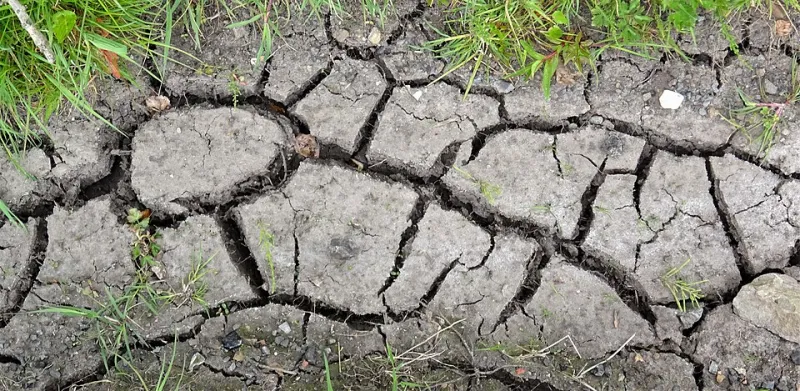
Photo: Rosser1954, CC BY-SA 4.0, via Wikimedia Commons
Every few years, American business rediscovers the same lesson. In 2001, it was the collapse of companies that had never operated in a market where capital wasn't free-flowing. In 2008, it was businesses built on a single channel—consumer credit, real estate, one retail partner—learning what concentration costs. In 2022 and 2023, it was the venture-backed startups that had spent a decade optimizing for zero-interest-rate economics and discovered, abruptly, that the climate had changed.
The pattern deserves a name. Call it the seasonality trap: the tendency to build a business that thrives in exactly one set of conditions, and to mistake that thriving for durability.
How Companies Become Seasonal
Seasonality rarely announces itself. It accretes through a series of reasonable decisions made during good weather.
A founder raises venture capital and builds the burn rate the round allows. Reasonable—in a climate of cheap capital. A SaaS company finds one channel that works, perhaps paid acquisition through a single platform, and pours resources there. Reasonable—while the platform's costs stay stable. A services firm lands two anchor clients who represent 60% of revenue. Reasonable—while those clients are healthy.
Each decision optimizes for the current season. None of them is reckless in isolation. Together, they produce a company that cannot survive a change in weather, because everything about its cost structure, its pipeline, and its assumptions is calibrated to conditions it does not control.
The Perennial Alternative
The companies that endure across cycles are not the ones that predicted the downturn. They are the ones that engineered for variance—what we'd call perennial business models. Three design principles separate them.
Diversified revenue before it's urgent. The best time to add a second channel, a second customer type, or a second geography is when you don't need either. A software company we observed through the last downturn had deliberately capped its largest customer at 15% of revenue years earlier, declining deals that would have spiked growth in the short term. When its biggest industry vertical froze spending in 2020, the cap was the reason it didn't.
A cost structure with slack built in. Perennial businesses run on the assumption that conditions will worsen at some point, not as pessimism but as engineering. They keep fixed costs modest, favor variable arrangements where possible, and maintain a cash runway measured against a downside scenario rather than a forecast. This is not austerity. It's the difference between a plant with deep roots and one grown in a greenhouse.
Revenue that doesn't require the weather to cooperate. Recurring contracts, multi-year agreements, and diversified deal sizes all reduce a company's dependence on favorable conditions in any given quarter. A business where 70% of next year's revenue is already contracted experiences a downturn very differently from one that must re-earn its book of business every twelve months.
The Honest Trade-Off
The objection writes itself: perennial design is slower. Companies that cap concentration, resist burn, and diversify early will, in a favorable climate, grow more slowly than their fair-weather competitors. Some of those competitors will win outright and the discipline will have been unnecessary.
That's true, and it's worth saying plainly: resilience is an insurance premium, and some years you'll feel like you overpaid for it. But the asymmetry matters. The fair-weather company that hits a bad season doesn't merely slow down—it often ceases to exist, taking its employees' livelihoods and its customers' reliance with it. The perennial company hits the same season, adjusts, and keeps growing on the other side.
Check Your Climate Exposure
A simple exercise for any leadership team: list the external conditions your current model depends on. Cost of capital. Platform pricing. The health of your top three customers. The stability of your primary acquisition channel. Regulatory posture in your industry. Then ask, for each one: if this changed by 30% in the wrong direction over the next twelve months, what happens to us?
If you can't answer, or the answer is grim, you've found your seasonality. The fix takes time—which is precisely why it's worth starting now, while the weather is whatever it is, rather than waiting for the forecast to force your hand. Businesses, like gardens, are built in one season for all the others.