The Invisible Ceiling: Recognizing When Founder-Led Operations Are Holding Your Company Back

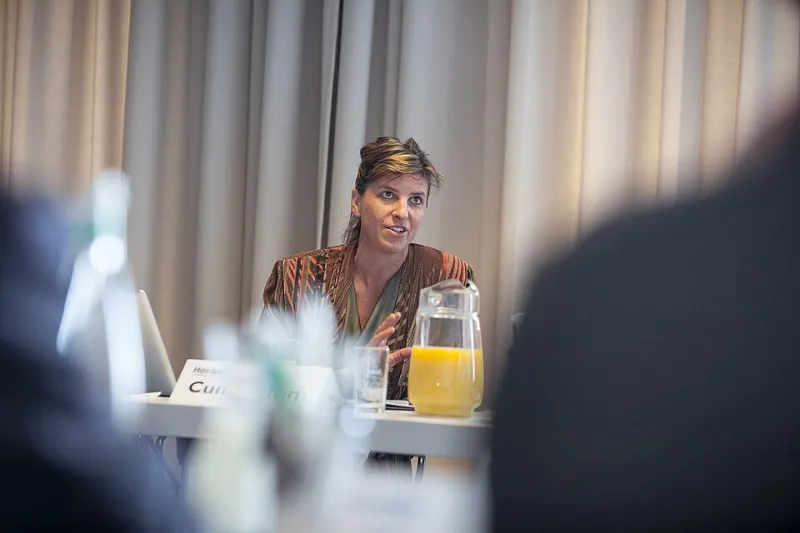
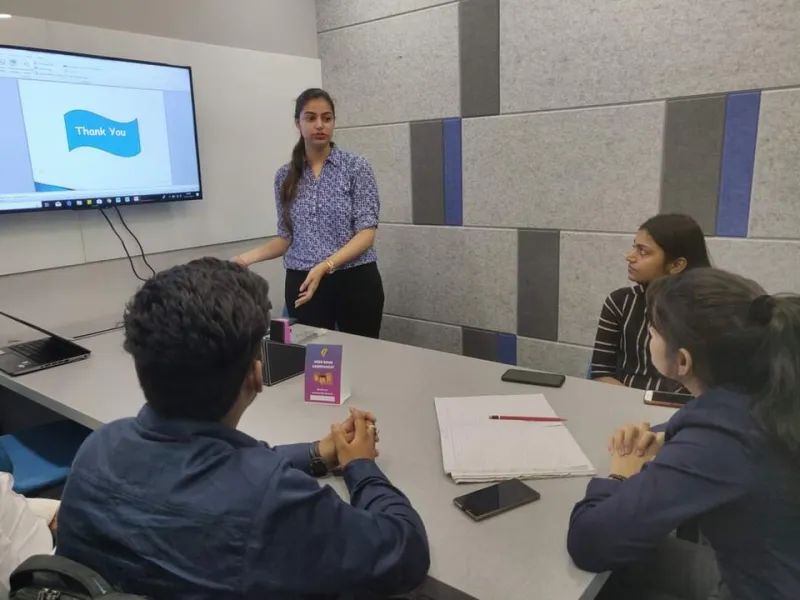
Photo: founder entrepreneur stepping back leadership transition office meeting, via cdn.under30ceo.com
There is a particular kind of pride that comes with being the person who does it all. In the early days of a startup, that pride is earned. The founder who answers customer emails at midnight, closes the first ten deals personally, and builds the initial product roadmap from scratch is not being reckless—they are being resourceful. But resourcefulness has a shelf life.
At some point, the habits and instincts that allowed a company to survive its earliest months begin to conflict with the demands of a company that is actually growing. The founder becomes less of an engine and more of a chokepoint. And the troubling part is that most founders do not recognize this transition until it has already cost them something significant—a key hire who left, a contract that fell through, or a quarter that underperformed for reasons that were entirely preventable.
This article is about that moment: what it looks like, what it costs when you miss it, and how to act before the ceiling becomes permanent.
What the Bottleneck Actually Looks Like
Most founders do not wake up one morning and decide to become the problem. The bottleneck forms gradually, through accumulation. Decisions that could be delegated get routed back to the founder because "it's faster this way." Processes that could be documented stay locked inside one person's institutional knowledge. Team members stop bringing ideas forward because they know every initiative will get filtered through a single point of approval.
The operational signals are usually visible before the psychological ones. Watch for these patterns:
- Meetings multiply around you. If your calendar is the dependency for every cross-functional decision, your organization has structurally centered itself on your availability.
- Your team executes but does not initiate. High-functioning employees who consistently wait for direction rather than proposing solutions are responding rationally to a culture that has not granted them real authority.
- Growth plateaus despite strong demand. When the market is willing but the company cannot absorb new business without straining, the constraint is almost always internal—and frequently human.
- You are the last person to leave every problem. If no issue ever reaches resolution without your involvement, you have not built a team; you have built a support system for yourself.
These are not signs of bad leadership in the traditional sense. They are signs of leadership that has not yet evolved to match the size of the business it is leading.
The Psychological Resistance That Keeps Founders Stuck
Understanding the operational signals is relatively straightforward. Acting on them is not, because the resistance is rarely logical—it is emotional.
Many bootstrapped founders conflate delegation with loss of control, and loss of control with existential risk. When you have personally bet your savings, your reputation, and years of your life on a company, the idea of handing a meaningful portion of it to someone else can feel genuinely dangerous. This is not irrational. Early-stage startups often survive precisely because a single person cares more than anyone else possibly could.
But that calculus changes. A founder who cannot tolerate decision-making happening outside their direct supervision is not protecting their company—they are capping it. The business can only grow as fast as one person can process information and issue approvals. In a competitive market, that is not a sustainable position.
There is also the affordability argument, which is real but often overstated. Many founders delay hiring leadership roles because they genuinely cannot afford a senior executive salary. This is a legitimate constraint. But the question worth asking is not "Can I afford to hire this person?" It is "What is the current cost of not having them?" When the answer involves lost revenue, team attrition, or founder burnout, the math often shifts.
A Framework for Deciding What to Delegate First
Not every responsibility should be delegated at the same time, and not every founder needs to step back from the same functions. The goal is not abdication—it is strategic redistribution of authority.
A useful starting point is to categorize your current responsibilities across three dimensions:
1. Where you are irreplaceable (for now). These are typically the activities that require your specific relationships, your vision, or your credibility with stakeholders. Fundraising conversations, key partnership negotiations, and culture-setting decisions often belong here—at least in the near term.
2. Where you are competent but not exceptional. Many founders are capable operators across a wide range of functions—finance, marketing, product—but not genuinely excellent in all of them. These are the areas where a focused hire, even at a modest level, will outperform you within months.
3. Where you are actively creating drag. These are the tasks you are doing primarily because no one else is doing them—not because you are the right person for the job. Administrative coordination, routine vendor management, and process execution often fall into this category. These should be delegated or systematized immediately.
Start with the third category. It costs the least and returns the most time. Use that recovered time to invest in the second category—either by hiring or by building systems that reduce your personal involvement. Protect the first category vigilantly, but revisit it regularly, because what is irreplaceable today may not be in twelve months.
The Cost of Waiting Too Long
Founders who delay this transition rarely do so indefinitely. Eventually, the market or the team forces the issue. But the companies that make this transition reactively—after a crisis, after losing a key employee, after a growth opportunity passes them by—pay a higher price than those who act with intention.
The most underappreciated cost is cultural. When an organization learns to operate in a founder-dependent mode, it internalizes that dependency. Employees stop developing judgment because judgment is never required of them. Initiative atrophies. By the time a founder decides to step back, the team may not yet be capable of filling the space—not because they lack talent, but because the environment never demanded it of them.
Building leadership capacity before it becomes urgent is, in this sense, a form of organizational infrastructure. It is the kind of investment that does not show up on a balance sheet but determines whether a company can survive its own success.
Growing Past Yourself
The most enduring companies are not built by founders who held on longest. They are built by founders who understood, at the right moment, that their highest contribution was no longer doing the work—it was creating the conditions for others to do it better.
That shift is not a concession. It is a form of maturity that the best-run startups in the country have learned to cultivate deliberately. The question is not whether your company will eventually outgrow founder-led operations. It will. The question is whether you will be ready when it does.