When Your First Champions Become Your Ceiling: Managing the Human Cost of Scaling
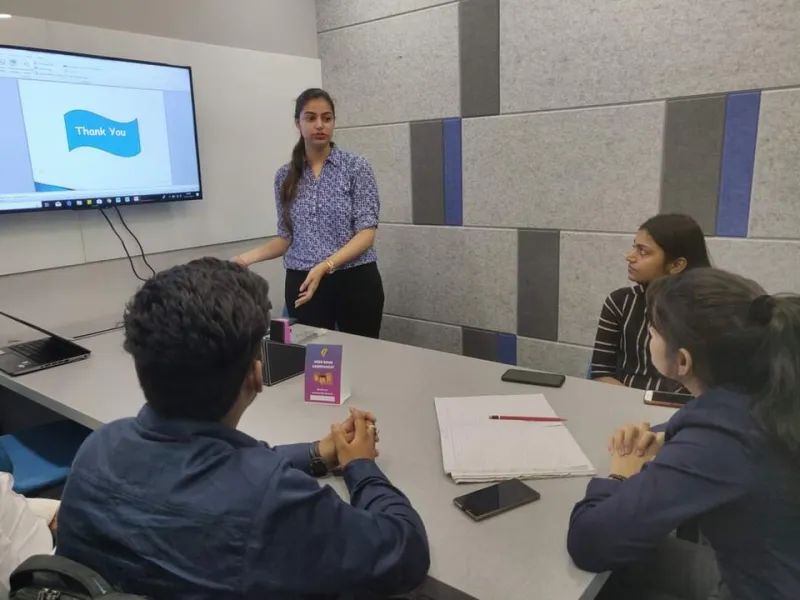
Photo: Eshopbox, CC BY-SA 4.0, via Wikimedia Commons
The Person Who Saved You May Also Be the One Holding You Back
Every founder has one. The first marketing hire who could write copy, manage social channels, negotiate vendor contracts, and still find time to onboard new clients. The early engineer who shipped features in a weekend that a larger team would have debated for a quarter. These individuals are remarkable—adaptive, resourceful, and deeply loyal. They are, in many ways, the reason the company is still standing.
But as companies grow from five employees to fifty, from $500,000 in revenue to $5 million, something unexpected begins to surface. The very qualities that made these early contributors indispensable—their comfort with ambiguity, their resistance to process, their ability to operate without oversight—can become friction points in an organization that now requires coordination, documentation, and repeatable systems.
This is what some organizational researchers and business coaches have come to call the founder's paradox of talent: the people best suited to help you survive early chaos are frequently the least equipped to help you build beyond it.
Why Early-Stage Excellence Doesn't Always Translate
The competencies required to thrive in a pre-product-market-fit startup are genuinely different from those required at the Series A stage and beyond. Early contributors often develop what might be described as a "generalist reflex"—a learned behavior of solving whatever problem is directly in front of them, regardless of role definition or departmental boundary.
This is enormously valuable at the seed stage. It is often deeply counterproductive at scale.
Consider the experience of a SaaS founder in Austin, Texas, who built her customer success function almost entirely around one early employee who had joined before the company had a formal product. That individual handled onboarding, renewals, escalations, and even contributed to product roadmap discussions. When the company crossed 200 customers, the founder recognized that a structured team was necessary—one with defined roles, tiered responsibilities, and documented processes.
The early employee, rather than leading that transition, actively undermined it. Not out of malice, but out of a genuine belief that process was inefficiency dressed up in corporate language. He had built his professional identity around being the person who could handle everything. A system that distributed that responsibility felt like a demotion, even when it wasn't.
The founder eventually had to make a difficult choice. She did so only after recognizing that the problem wasn't the employee's competence—it was a fundamental mismatch between his natural operating style and the needs of the organization at its current stage.
The Psychological Dimension
What makes these situations particularly complex is that they are not merely operational challenges. They are deeply personal ones.
Early employees often carry a psychological ownership of the company that goes beyond their equity stake. They were there when the odds were long. They accepted below-market compensation because they believed in the mission. They worked weekends and took calls on vacation. When the organization begins to formalize—when their once-broad authority is narrowed into a defined function—many interpret that shift as a signal that their contributions are no longer valued.
Founders frequently make this worse by avoiding the conversation altogether. Uncomfortable with conflict, and genuinely grateful for past contributions, they delay addressing performance gaps or role mismatches until the situation has become operationally urgent. By that point, the emotional stakes on both sides are significantly higher.
Organizational psychologists have noted that this pattern is not unique to any particular industry or company size. It is, rather, a predictable consequence of the emotional contracts that form in high-pressure, early-stage environments—contracts that were never explicitly negotiated and are therefore almost impossible to formally renegotiate.
A Framework for Identifying the Gap Before It Becomes a Crisis
The most effective founders address this challenge proactively, before performance deteriorates and before team dynamics are strained. Several practical frameworks can help.
The Role Horizon Audit. At regular intervals—ideally tied to growth milestones rather than calendar quarters—founders should map the responsibilities each key employee currently holds against the responsibilities that role will require in twelve to eighteen months. Where the gap is large, a candid conversation should begin immediately, well before the gap becomes a liability.
The Chaos-to-Clarity Assessment. Ask yourself honestly: does this person perform better when there are no rules, or when there are clear ones? Some individuals are energized by structure; others are constrained by it. Neither is a character flaw. But placing a chaos-native employee into a structure-dependent role is a setup for mutual frustration.
The Honest Promotion Test. Before promoting an early employee into a leadership position, ask whether you are doing so because they are genuinely the best candidate for that role going forward, or because you feel you owe them the recognition. Loyalty is a legitimate value. It is not, however, a qualification.
The Redeployment Option. Not every role mismatch requires a separation. Some early employees who struggle in formalized environments thrive when redeployed into roles that still require their generalist, high-ambiguity skill sets—new product initiatives, market expansion efforts, or internal innovation functions. This is not always possible, but it is worth exploring before defaulting to termination.
Having the Conversation
When a role mismatch is identified, the conversation that follows should be direct, specific, and grounded in observable behavior rather than personality assessments. Founders who frame these discussions as "here is what the role requires, here is what I am observing, and here is what I need from you" tend to achieve better outcomes than those who rely on vague feedback about "culture" or "fit."
In some cases, the employee will rise to meet the new expectations. In others, they will recognize on their own that the environment has changed in ways that no longer suit them. Either outcome, while emotionally difficult, is preferable to allowing a misaligned contributor to remain in a role where they cannot succeed—and where their presence may be actively impeding the team around them.
Building a Talent Strategy That Accounts for the Long Game
The broader lesson for founders is this: talent strategy cannot be static. The people you need to get from zero to one are rarely the same people you need to get from one to ten, and those individuals are rarely the same ones required to reach one hundred.
This does not mean early employees are disposable. It means that a thoughtful, growing organization continuously evaluates whether its people and its roles are evolving at the same pace—and intervenes with honesty and care when they are not.
At Budding Solutions, we work with growing companies to develop the organizational frameworks and leadership conversations that make scaling a human process, not just an operational one. The companies that scale well are those that honor the contributions of their early teams while having the courage to lead them—or transition them—with integrity.